
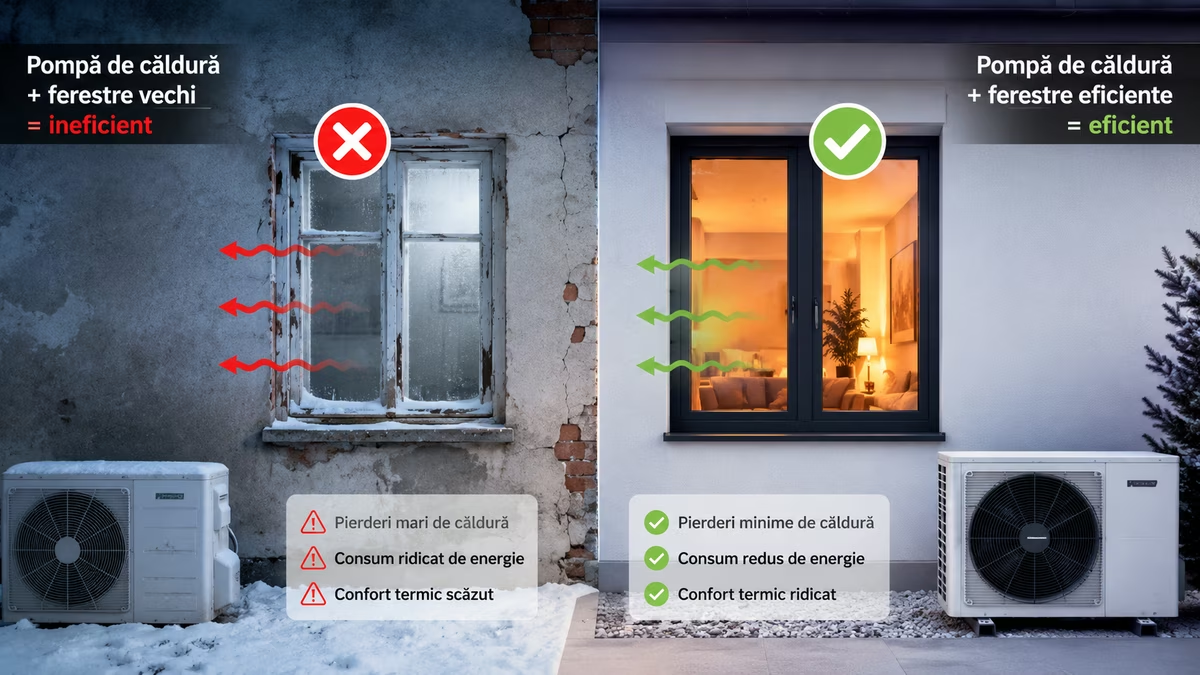

A heat pump performs best at low flow temperatures. Old windows raise the heat demand, force the system to run hotter and cancel exactly the saving you installed it for.
Romania’s Casa Verde PLUS programme funds heat pump installations in 2026 with up to 70% of the cost. Many owners do the maths for the equipment alone, install it in a house with twenty-year-old windows, and find the following winter that the electricity bill has not dropped as much as expected. The explanation is not the pump but the building envelope — and windows are its weakest part.
Why a heat pump behaves differently from a gas boiler
A gas boiler produces water at 60–75 °C and is not greatly bothered if that temperature rises. Its efficiency stays roughly constant.
A heat pump works on a different principle: it does not produce heat, it moves it from the outside air into the house. Its efficiency is measured by the COP — how many times more thermal energy it delivers than the electricity it consumes. And the COP depends directly on the difference between the source temperature and the temperature the water has to reach in the system.
The practical rule: the lower the flow temperature, the less the pump consumes. At 35 °C flow, a modern pump can reach a COP of around 4. Raise the flow to 55 °C and the COP falls towards 2.5–3. Same house, same equipment, but the bill rises by 30–40%.
Where windows enter the equation
The flow temperature is not chosen arbitrarily. It follows from the heat demand of the house: the more heat you lose through walls, roof and windows, the more the system has to deliver to hold 21 °C in the room.
An old window with first-generation double glazing has a Uw of around 2.8–3.2 W/m²K. A current nZEB window sits at 0.9–1.1. That is a factor of three. On a house with 25 m² of glazed area, this means several extra kilowatts of demand — exactly enough to push the system out of the efficient range and into the one where the pump has to work hard.
How to read this figure, and what each number means, is set out in the guide on what thermal coefficient windows should have.
Surface temperature and the comfort problem
Systems optimised for heat pumps usually use underfloor heating or oversized radiators, precisely so they can run at low temperatures — heating slowly and evenly, without peaks.
A window with a high Uw has cold glass on the inside — below 14–15 °C on frosty days. The body loses heat by radiation towards that cold surface, and it feels cold even though the thermometer reads 21 °C. The owner’s natural reaction is to turn up the thermostat, which forces the pump to raise the flow temperature and brings back exactly the problem described above.
With triple glazing and a warm edge spacer, the inner glass surface stays around 17–18 °C, close to the wall temperature. The comfort difference is obvious and it lets you keep the same thermal sensation at a lower air temperature.
Air leakage matters just as much
Uw describes heat transfer through the window. It says nothing about the air coming in around it.
Joinery with worn gaskets lets cold air in continuously. For a gas boiler that means slightly higher consumption; for a tightly sized heat pump it can trigger the electric backup heater — the element that draws the most power and cancels the system’s economic advantage.
You can check the airtightness yourself in a few minutes with the paper sheet test. If the paper slides out without resistance, you have leakage.
What Uw you actually need
For a house where a heat pump is going in:
| Situation | Recommended Uw | Glazing |
|---|---|---|
| Renovation, limited budget | ≤ 1.3 W/m²K | double low-E, warm edge |
| Renovation, efficiency target | ≤ 1.1 W/m²K | triple, warm edge |
| New house with heat pump | ≤ 0.9 W/m²K | triple, deep profile |
Below 1.1 W/m²K, a well-designed system can run at 35–40 °C flow, which is where the pump reaches its rated efficiency. Above 2.0, the system has to raise the temperature and the promised saving erodes.
Installation counts too: a high-performance window fitted with foam alone leaves thermal bridges around the opening, adding losses that never appear on the data sheet. The gap between catalogue figures and reality in the house almost always comes from there.
The right order of investment
If your budget is limited and you want to do both jobs, the order matters more than it seems.
Envelope first, equipment second. The pump is sized according to the heat demand of the house. Sized for a house with old windows, it comes out larger and more expensive; replace the windows afterwards and you are left with an oversized pump that cycles frequently and runs below optimum efficiency. The other way round, replacing the windows first lowers the demand, so the pump can be smaller — cheaper to buy and more efficient to run.
Costs and available funding options are covered in the guide on subsidies for window replacement in 2026.
FAQ — heat pumps and windows
Is a heat pump worth installing if I have old windows?
It can be installed, but it will not perform to specification. Old windows increase the heat demand, which forces the system to run at higher flow temperatures, where the COP falls. The result is a higher electricity bill than the one estimated at purchase.
What Uw should windows have for a heat pump?
As a practical benchmark: below 1.3 W/m²K for a renovation on a limited budget, below 1.1 W/m²K if you want the pump’s real efficiency, and below 0.9 W/m²K for a new house designed from the start around a heat pump and underfloor heating.
Should I replace the windows first or install the pump first?
Windows first. The pump is sized according to the heat demand of the house. Choose it before reducing losses and you buy oversized, more expensive equipment that will cycle frequently and run below optimum efficiency once the envelope is improved.
Why do I feel cold near the window when the thermostat reads 21 degrees?
Because glass with a high Uw has an inner surface temperature well below the air temperature, and the body loses heat by radiation towards that cold surface. With triple glazing and a warm edge spacer, the inner face stays around 17–18 °C and the discomfort disappears.
How much does airtightness matter compared with the Uw?
Comparably. Uw describes transfer through the window, but air leaking around the sash adds separate losses. On a tightly sized pump, that leakage can trigger the electric backup heater, which consumes heavily and cancels the system’s economic advantage.
Neofort BIZ supplies and installs Salamander PVC and Alumil aluminium joinery in Bucharest and Ilfov, with triple glazing, warm edge spacers and three-plane sealed installation. If you are preparing a house for a heat pump and want to know what Uw you need, send us the project details and you will receive a quote within 48 hours. See also the complete nZEB systems or the triple vs double glazing comparison.
The energy performance certificate classifies a building from A to G. Find out what it is,…
Read →nZEB SystemsWhat Windows Should You Choose for an nZEB House in Romania? Complete Guide 2026Complete technical guide for nZEB windows in Romania 2026: mandatory minimum values, recom…
Read →Technical GuideTriple vs Double Glazing: How Much Do You Really Save on Heating? Real Calculations 2026Is triple glazing worth it vs classic double? Concrete calculations for apartments and hou…
Read →