
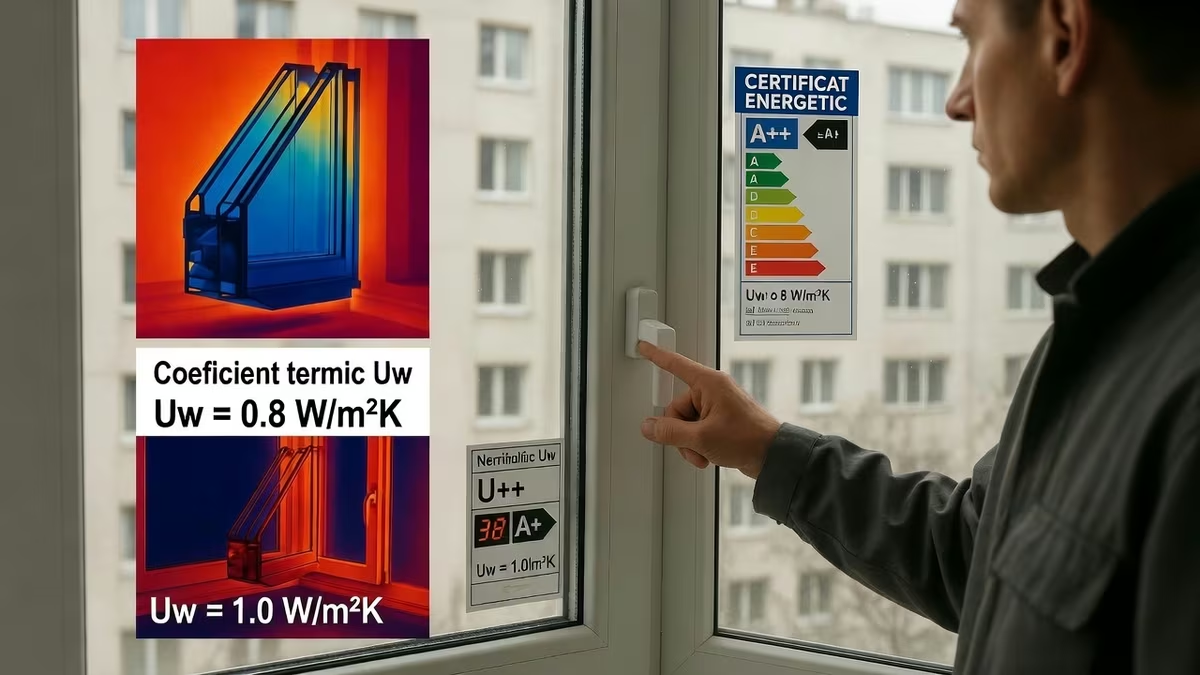

The energy performance certificate classifies a building from A to G. Find out what it is, what components it consists of (envelope, technical systems, renewable sources) and how the windows’ Uw coefficient directly influences the energy class and the home’s value.
The energy performance certificate (EPC) has become an essential document for any owner who wants to sell, rent or build a home. Beyond the legal obligation, it offers a clear picture of the building's energy efficiency — and windows, through their thermal coefficient, play a direct role in the energy class obtained. This guide explains what the energy certificate is, what components it consists of and how window performance integrates into the final assessment.
What the energy performance certificate is
The energy performance certificate is a technical document, regulated by Law 372/2005, which evaluates the amount of energy a building consumes annually for heating, cooling, ventilation, lighting and domestic hot water. Based on this calculation, the building receives an energy class from A (most efficient) to G (least efficient), similar to the appliance label.
The document is issued exclusively by a certified energy auditor, according to the Mc 001-2022 calculation methodology, and has a validity of 10 years, provided the home does not undergo major energy-related modifications.
When the energy certificate is mandatory
According to Law 372/2005, the energy certificate is mandatory in several clearly defined situations:
| Situation | Certificate mandatory? |
|---|---|
| Selling a home or space | Yes — provided to the buyer |
| Renting longer than 30 days | Yes — class mentioned in the listing |
| Reception of a new building | Yes — part of the final documentation |
| Accessing renovation funds (PNRR) | Yes — in many cases |
When selling, the notary cannot authenticate the transaction without the certificate, and its absence can attract relative nullity of the contract. When renting and in real estate listings, the energy class must be explicitly mentioned.
The components of the energy certificate
The energy certificate analyses the building as an integrated system. The main components evaluated are:
| Component | What it evaluates |
|---|---|
| Building envelope | Walls, roof, floors, windows and doors |
| Technical systems | Heating, hot water, cooling, ventilation |
| Energy sources | Fuel type, equipment efficiency |
| Renewable sources | Photovoltaic panels, solar thermal |
The envelope data explicitly includes the window type — the number of glass layers and the thermal transfer coefficient. Lower U values mean better insulation and a lower estimated consumption, which pushes the building towards a higher energy class.
How the window coefficient integrates into the certificate
This is where the direct role of joinery comes in. The energy auditor takes the windows' Uw coefficient into account as part of envelope losses. An old window, with a single pane or cheap double glazing, can have a Uw of 2.5–3.5 W/m²K, while a modern thermally insulating window drops to 0.8–1.0 W/m²K. The difference translates directly into estimated energy consumption and, implicitly, into the energy class.
In other words, replacing old windows with high-performance joinery is one of the most effective measures to climb in the building's energy class. To understand exactly which values matter, read What thermal coefficient should windows have.
> A building in class F or G can generate monthly utility costs 50–70% higher than one in class A or B, for the same surface area.
Why the energy class matters for the home's value
Beyond the legal obligation, the energy class has real financial impact. A higher classification (A or B) can increase the property's market value by 10–15%, while lower classes become a negative signal for buyers and banks, which may refuse lending under "green mortgage" policies. Investment in high-performance windows is thus reflected both in lower bills and a higher resale value. If you are planning a renovation, also see How to choose energy-efficient windows.
FAQ — Building energy certificate
What is the energy performance certificate?
It is a technical document regulated by Law 372/2005, which evaluates a building's annual energy consumption and classifies it from A (efficient) to G (inefficient). It is issued by a certified energy auditor and is valid for 10 years.
When do I need an energy certificate?
When selling or renting a home (over 30 days), at the reception of a new building and, in many cases, when accessing energy renovation funds such as PNRR. When selling, the notary cannot authenticate the transaction without it.
What components does the energy certificate consist of?
It evaluates the building envelope (walls, roof, floors, windows and doors), the technical systems (heating, hot water, cooling, ventilation), the energy sources and the renewable sources. Windows enter the calculation through their Uw thermal coefficient.
How do windows influence the energy class?
Windows contribute to envelope losses. An old window can have a Uw of 2.5–3.5 W/m²K, a modern one 0.8–1.0 W/m²K. Replacing old windows with high-performance joinery reduces estimated consumption and helps climb in the energy class.
How long is the energy certificate valid?
The energy certificate is valid for 10 years from issuance, provided no major modifications are made to the building. If you carry out insulation works or replace the windows, you can request a new certificate for a higher class.
Neofort BIZ supplies and installs Salamander PVC and Alumil aluminium joinery with high-performance thermal coefficients, which contribute to a higher energy class, in Bucharest and Ilfov. Request a free technical consultation. Learn more about our Salamander PVC systems we offer.
A heat pump performs best at low flow temperatures. Old windows raise the heat demand, for…
Read →nZEB SystemsWhat Windows Should You Choose for an nZEB House in Romania? Complete Guide 2026Complete technical guide for nZEB windows in Romania 2026: mandatory minimum values, recom…
Read →Technical GuideTriple vs Double Glazing: How Much Do You Really Save on Heating? Real Calculations 2026Is triple glazing worth it vs classic double? Concrete calculations for apartments and hou…
Read →