

Which exterior shading system suits you: ZipScreen, aluminium roller shutters, Raffstore blinds or a pergola? A complete guide with direct comparisons, blackout vs screen, indicative prices and Somfy automation.
What is Zipscreen and why is it different from classic roller shutters
At first glance, Zipscreen looks like an ordinary exterior roller. The fundamental difference is invisible until the wind blows.
A classic exterior roller shutter — even aluminium — has the fabric edges free in the guides. In wind, the fabric bulges, flutters and can exit the rails. Zipscreen solves this with the ZIP fastener: the fabric edges are mechanically locked in a U-shaped aluminium profile, exactly like a jacket zipper. The fabric cannot exit the guides regardless of wind intensity — the system is tested and certified Class 6 Beaufort, up to 88 km/h.
This is the difference that justifies the higher price versus a classic roller and makes Zipscreen the only viable textile solution for open terraces, pergolas and exposed facades.
The four exterior shading systems — which one suits you
Before going into ZipScreen details, it is worth knowing what alternatives you have. Four main types of exterior solar protection are installed, each with its own strengths:
Aluminium roller shutters are the most widespread: rigid slats, good thermal and acoustic insulation, complete darkness and added security. They are the classic choice for bedrooms and street-facing windows.
Exterior venetian blinds (Raffstore) have tiltable slats, giving you fine control over light: you can shade without darkening the room completely. The detailed comparison between the two is in Raffstore blinds vs aluminium roller shutters.
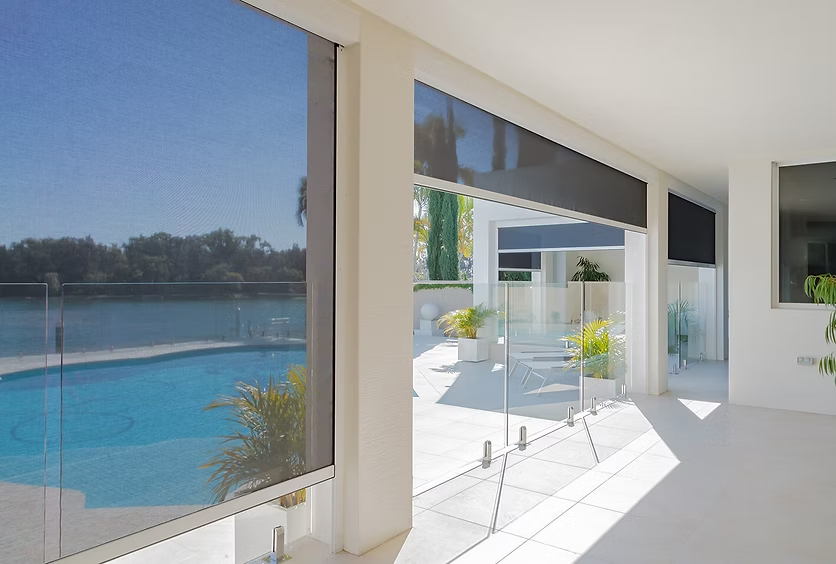
ZipScreen — the system detailed in this guide — uses a technical fabric guided in a lateral zip, wind-resistant, ideal for terraces and large glazed areas. It can be transparent (keeps the view) or blackout (total darkness): the practical difference is explained in ZipScreen blackout or transparent — how to choose.
Pergolas are the solution for terraces and gardens, where you are not shading a window but an entire outdoor space. The difference between bioclimatic ones (with tiltable louvres) and classic ones is detailed in Bioclimatic vs classic pergola.
If you want to see directly what options and prices exist on the Bucharest market, also read Where to buy shading systems in Bucharest. Details on each type of automation are in Somfy motors for roller shutters, pergola and awning automation and smart home integration with Somfy TaHoma.
Blackout or Screen — the real difference
This is the first and most important decision when purchasing Zipscreen.
Zipscreen Blackout (opaque)
The fabric lets no light through. Concrete advantages:
- Indoor temperature reduction of 15–20°C versus an unprotected space
- Total privacy — nothing visible from outside, day or night
- Ideal for ground floor bedrooms, restaurants wanting privacy, terraces facing west or south
Disadvantage: once lowered, you lose the exterior view and natural light.
Zipscreen Screen (transparent or perforated)
The fabric has microperforations — from 3% to 10% visual openness. Advantages:
- 95–98% UV filtering — protects skin and furniture without blocking light
- View maintained from inside to outside (outside-to-inside visibility much reduced — mirror effect)
- Temperature reduced by 8–12°C versus direct exposure
- Allows air circulation
Ideal for: residential terraces wanting shade without isolation, restaurants and cafes, balconies with views.
Neofort BIZ recommendation: if unsure, choose Screen. Offers 80% of blackout benefits with zero sacrifice of the view.
Zipscreen vs Aluminium Roller Shutters — direct comparison
| Criterion | Zipscreen | Aluminium Shutters |
|---|---|---|
| Material | Textile (woven PVC) | Aluminium slats |
| Wind resistance | Class 6 · 88 km/h | Class 4–5 · 600 Pa |
| Visibility | Screen: YES · Blackout: no | No |
| Solar reduction | Blackout: 95% · Screen: 70–80% | 70–85% |
| Night thermal insulation | Small | Good (ΔU ≈ 0.3 W/m²K) |
| Burglar resistance | No | RC2–RC3 |
| Maximum dimensions | 5,000 × 5,000 mm | 3,500 × 3,000 mm |
| Best for | Terraces, pergolas, large facades | Windows, balconies |
| Indicative price | 225–450 EUR/m² | 85–180 EUR/m² |
Prices and automation
Indicative prices for 2026:
| Configuration | Estimated price |
|---|---|
| Box 90, manual, 2×2 m | 450–600 EUR |
| Box 105, electric Somfy, 3×2.5 m | 900–1,200 EUR |
| Box 120, electric Somfy, 5×3 m | 1,500–2,200 EUR |
| Total area (including installation) | 225–450 EUR/m² |
WhatsApp: +40 752 443 435
Frequently Asked Questions
How is Zipscreen different from a classic exterior roller blind?
Zipscreen grips the fabric edges mechanically in a U-shaped aluminium track, exactly like a zip. The fabric cannot leave the guides regardless of wind — the system is certified Beaufort Class 6, up to 88 km/h. A classic blind, with free edges, flutters and can slip out of the rails.
Should I choose Zipscreen Blackout or Screen?
Blackout is opaque, cuts indoor temperature by 15-20°C and gives full privacy, but you lose the view and light. Screen has micro-perforations, filters 95-98% of UV, keeps the outward view and cuts temperature by 8-12°C. Recommendation: if unsure, choose Screen — 80% of the benefits without sacrificing the view.
What UV protection does Zipscreen Screen offer?
Zipscreen Screen, with micro-perforations of 3-10% visual openness, filters 95-98% of UV radiation, protecting skin and furniture without blocking light. It keeps the inside-out view and lets air circulate, cutting temperature by 8-12°C.
Does Zipscreen withstand strong wind on open terraces?
Yes. Thanks to the ZIP that locks the fabric edges in the guides, Zipscreen is tested and certified Beaufort Class 6, up to 88 km/h. It is the only viable fabric solution for open terraces, pergolas and wind-exposed façades.
Neofort BIZ installs ZipScreen, roller shutters, Raffstore and bioclimatic pergolas in Bucharest and Ilfov. Describe your terrace and you will receive a quote within 48 hours. See the shading systems range we offer.
Looking for exterior blinds in Bucharest? Complete guide: Raffstore venetian blinds vs ext…
Read →Shading SystemsBioclimatic vs Classic Pergola — Complete Buying Guide 2026Bioclimatic pergola with orientable louvres or classic retractable fabric pergola? Complet…
Read →nZEB SystemsWhat Windows Should You Choose for an nZEB House in Romania? Complete Guide 2026Complete technical guide for nZEB windows in Romania 2026: mandatory minimum values, recom…
Read →