
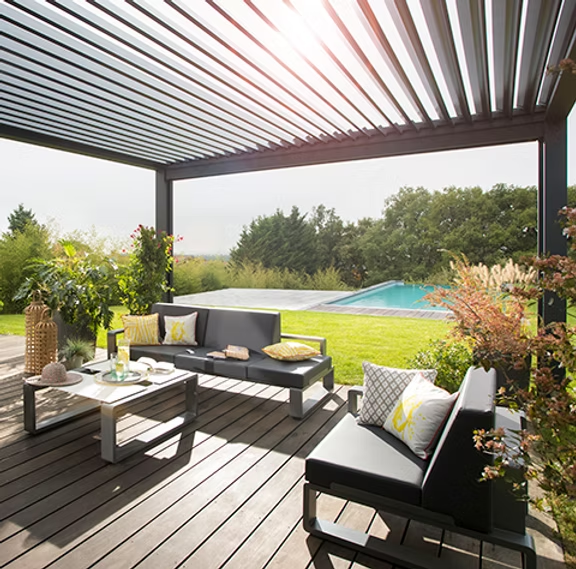

Bioclimatic pergola with orientable louvres or classic retractable fabric pergola? Complete buying guide with price, material and performance comparison for your terrace in 2026.
Bioclimatic vs classic pergola — what differences really matter?
If you have a terrace and want to cover it, you will quickly encounter two main categories of pergolas: the bioclimatic pergola (with orientable aluminium louvres) and the classic pergola (with retractable fabric, manual or motorised). Both have clear advantages, but for different terraces.
What is a bioclimatic pergola?
A bioclimatic pergola has a roof made of extruded aluminium louvres that can rotate between 0° and 120°. When closed, the louvres form a watertight roof that channels rainwater through the profiles. When open, they ventilate the space below. The structure is permanent, in anodised or powder-coated aluminium.
Bioclimatic pergola advantages:
- Permanent roof — not weather-dependent for use
- Integrated water drainage — works in rain without fabric
- Fine light adjustment through louvre orientation
- Superior durability — rigid structure, no fabric wearing out
Bioclimatic pergola disadvantages:
- Significantly higher price than classic pergola (2–4× more expensive)
- More complex installation — requires solid foundations or anchors
What is a classic retractable fabric pergola?
A classic retractable fabric pergola (including Somfy models with Pergola RGS io motor) uses waterproof fabric stretched over an aluminium structure, which can be retracted manually or electrically.
Classic fabric pergola advantages:
- Accessible price compared to bioclimatic pergola
- Easy automation with Somfy motors (Pergola 50/60 RGS io)
- Excellent solar protection — UPF 50+ fabrics
- Complete retraction — terrace fully open when fabric is retracted
Price comparison 2026
| Criterion | Bioclimatic | Classic with Somfy fabric |
|---|---|---|
| Installation price (4×3 m) | 8,000–18,000 EUR | 2,500–5,000 EUR |
| Structure durability | 20–30 years | 20–30 years |
| Fabric durability | — | 8–12 years |
| Works in rain | ✅ Yes | ❌ No |
| Automation | Optional | ✅ Somfy RGS io |
| Smart Home | Optional | ✅ TaHoma Switch |
Conclusion
Bioclimatic pergola wins on versatility and total durability but costs significantly more. Classic Somfy fabric pergola wins on value for money, automation and flexibility. Neofort BIZ supplies and installs Somfy automatic pergolas — Pergola 50/60 RGS io motor, UPF 50+ waterproof fabrics, TaHoma configuration included.
Request a Somfy automatic pergola quote
Frequently Asked Questions
What is the difference between a bioclimatic and a classic pergola?
A bioclimatic pergola has a roof of aluminium slats adjustable between 0° and 120°, with integrated water drainage — it works permanently, including in rain. A classic pergola uses a retractable fabric (manual or electric) that folds away when you want natural light.
Why is a bioclimatic pergola more expensive than a classic one?
A bioclimatic pergola costs 2-4 times more because it has a permanent aluminium structure, adjustable extruded slats, an integrated water-drainage system and more complex installation with foundations or solid anchors. In return it offers superior durability and all-weather use.
Does a bioclimatic pergola work in the rain?
Yes. When the aluminium slats are closed, they form a watertight roof that drains rainwater through the profiles, without fabric. When open, they ventilate the space below. This is the main advantage over a classic pergola, which depends on fabric for protection.
Which pergola should I choose for my terrace?
A bioclimatic pergola is ideal for permanent use, terraces used year-round and a larger budget. A classic pergola with retractable fabric (e.g. Somfy Pergola RGS io) suits an affordable budget and seasonally used terraces, offering flexible shade when needed.
Neofort BIZ installs bioclimatic and classic pergolas, with Somfy automation, in Bucharest and Ilfov. Learn more about the exterior roller shutters and blinds we offer or request a quote. See also the complete guide to exterior shading systems.
Looking for exterior blinds in Bucharest? Complete guide: Raffstore venetian blinds vs ext…
Read →Shading SystemsExterior shading systems — 2026 guide: ZipScreen, roller shutters, Raffstore, pergolasWhich exterior shading system suits you: ZipScreen, aluminium roller shutters, Raffstore b…
Read →nZEB SystemsWhat Windows Should You Choose for an nZEB House in Romania? Complete Guide 2026Complete technical guide for nZEB windows in Romania 2026: mandatory minimum values, recom…
Read →